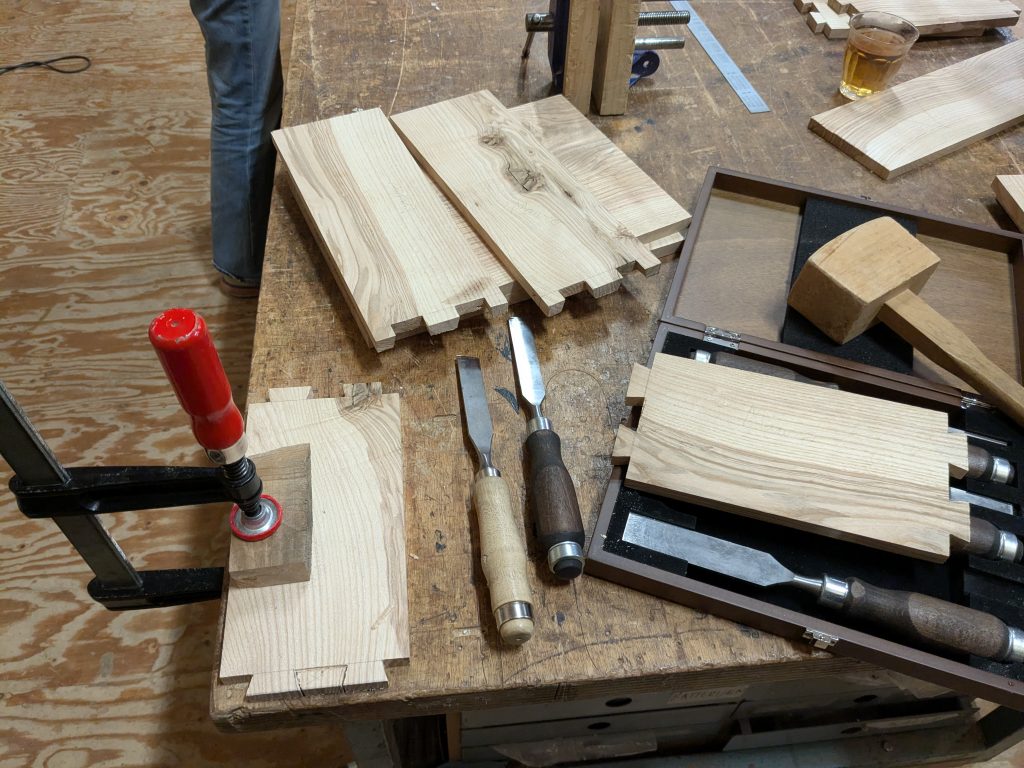
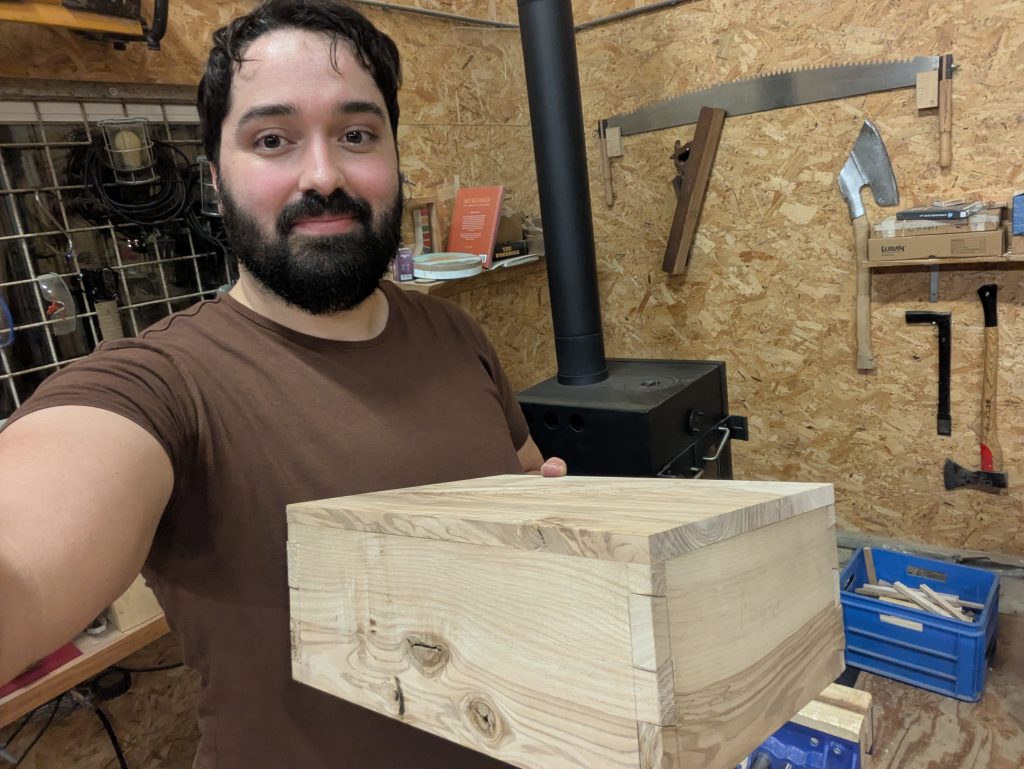
Lately, I’ve been working on a small dovetail box, made entirely by hand. No shortcuts, no machines—just wood, tools, and time. I wanted to fully understand the process from the inside out: not just how dovetails look when they’re finished, but how they feel while you’re making them.
What struck me most is how intricate and demanding the process really is. Drawing the lines alone takes practice—learning how to mark accurately, how to trust your eye, and how to commit to a line knowing that every cut afterward depends on it. Then comes the sawing: cutting exactly where you need to, stopping precisely when you should, resisting the urge to correct mid-cut. And finally, the chiseling—slowly removing material, listening to the wood, sneaking up on the perfect fit rather than forcing it.
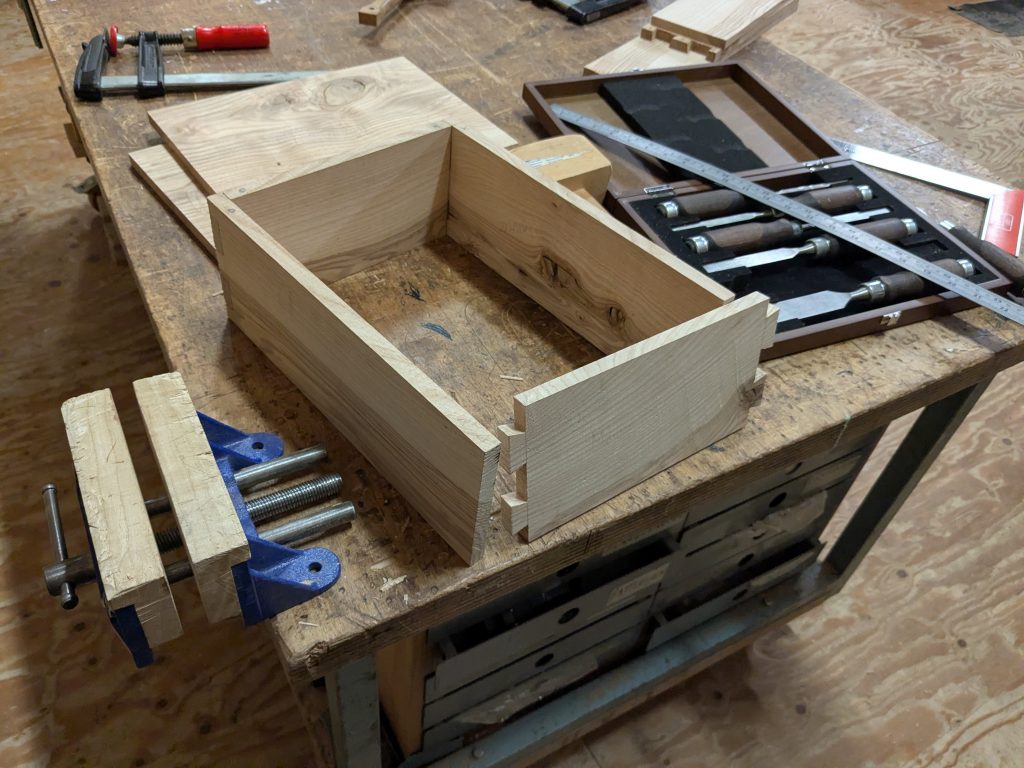
It’s tedious work in the best possible way. Each step asks for your full attention. Any lapse shows up immediately in the joint.
At one point, I made a mistake. I wanted to finish one more handsaw cut quickly—just one last push before stopping. That small moment of rushing was enough and I cut on the wrong side of the line. A reminder, plain and simple: rushing and woodworking don’t mix.
Luckily, it was nothing I couldn’t fix. A bit more time, careful chiseling, and patience brought everything back into balance. But the lesson stuck. The wood doesn’t care about your schedule. It only responds to what you do in the moment.
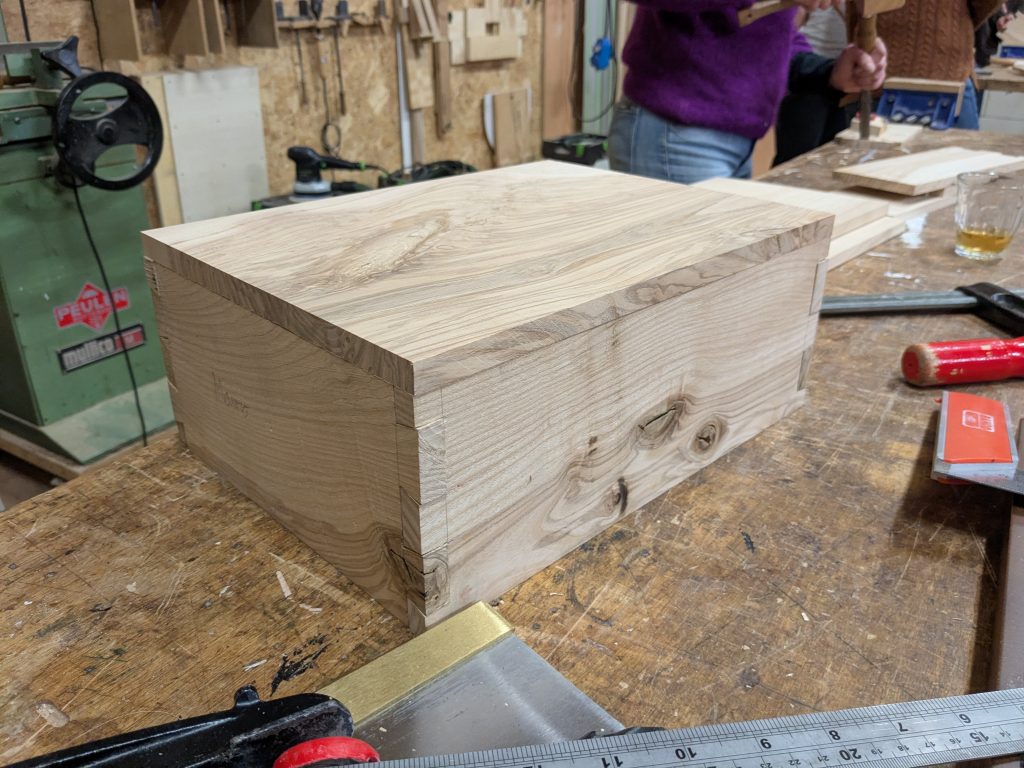
In the end, that’s what made the process so rewarding. The dovetail box isn’t perfect—but it’s honest. It carries the marks of learning, attention, and correction. Making it by hand deepened my respect for traditional joinery and for the quiet discipline it demands.
And if you’re wondering why my face is bright red in the last photo—no mystery there. Between working hard and standing right next to the fireplace, the workshop was toasty. Turns out focused handwork is a great way to warm up… maybe a little too effective 😅
Leave a Reply