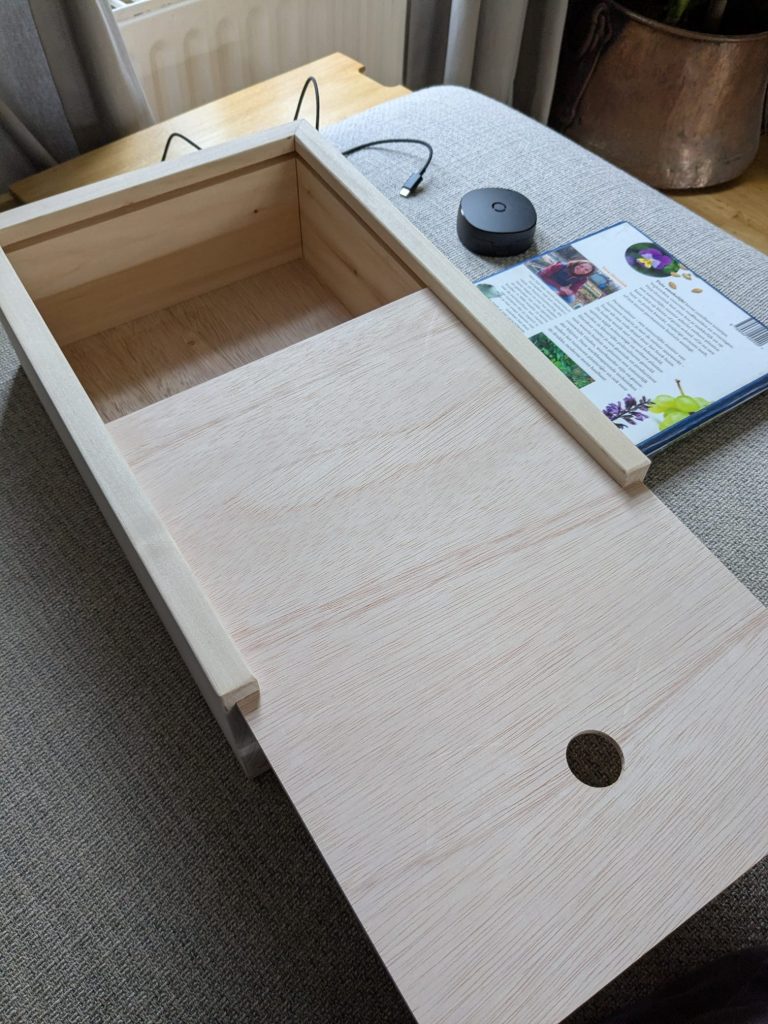
There is something satisfying about making a small object that requires precision at every step. During my machine woodworking course, we were tasked with building a wine box designed to hold two bottles. The main goal was not just the box itself, but to practice several different joinery techniques in one project.
Each joint we used served as a small exercise in accuracy and understanding how wood behaves.
The box incorporates four types of joints:
- Dobbelsteen joint
- Glued mitre (verstek) joint
- Plug joint
- Lamello joint
Each one required a slightly different approach with the machines and careful preparation before assembly. Practicing these techniques within a single project made it clear how much joinery influences both the strength and the aesthetics of a piece.
Glue-ups are always a moment of commitment. Once the glue is spread and the clamps go on, there is no turning back.
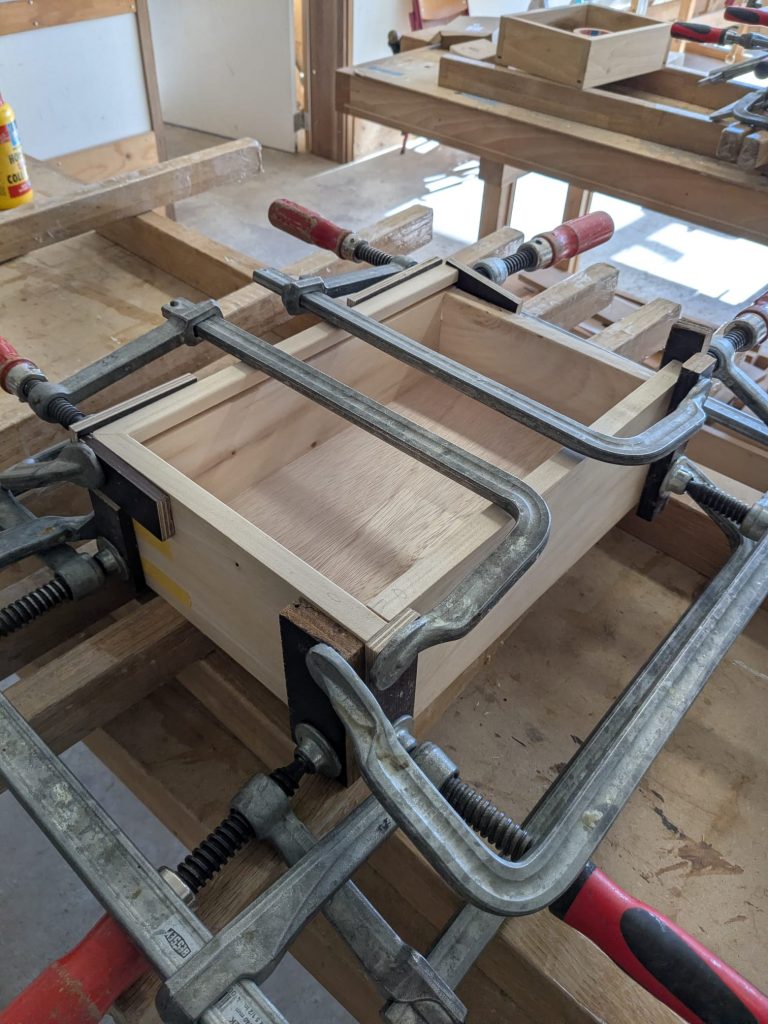
This stage requires preparation: making sure everything fits beforehand, organizing clamps, and working efficiently before the glue starts to set. Even with careful preparation, it’s always a bit of a puzzle to get every corner aligned and under the right pressure.
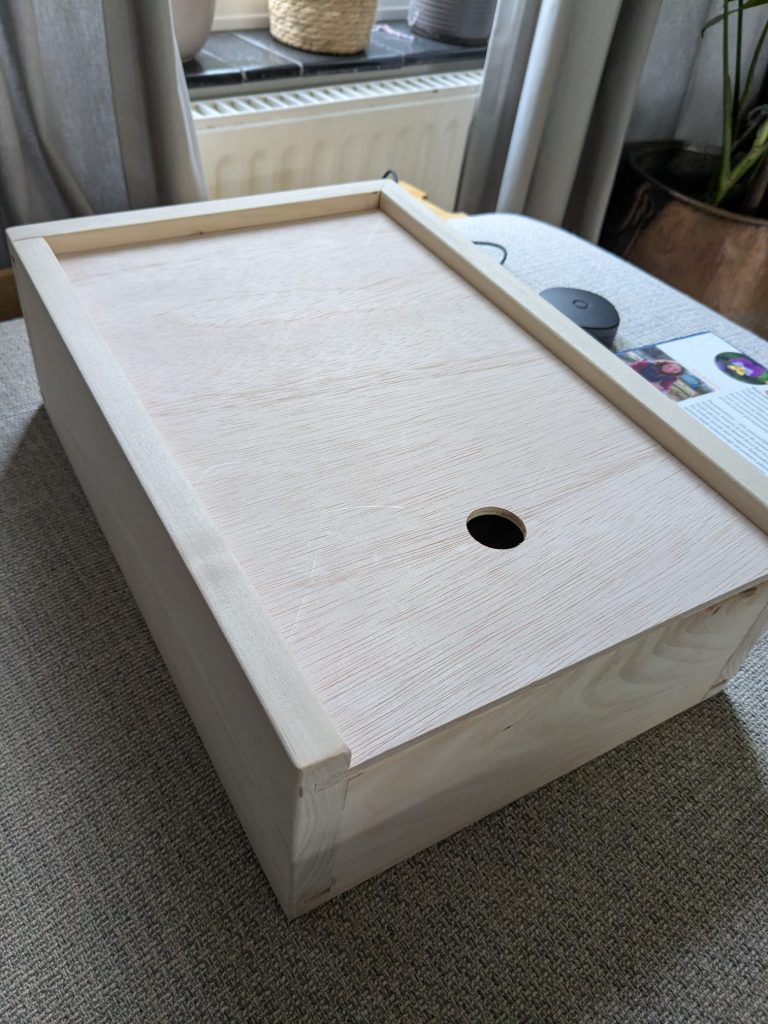
The goal was simple: it needed to sit tightly enough that it would not rattle when the box moved, but still slide open smoothly. Achieving that balance required very precise adjustments. Removing just a fraction too much material would make the lid loose, while leaving too much would make it stick.
Moments like that are where woodworking becomes less about machines and more about sensitivity and control.
In the end, the result is a simple wine box that holds two bottles. But more importantly, it represents a collection of small lessons in joinery, precision, and patience.
And sometimes the smallest boxes contain the most learning.
Leave a Reply